
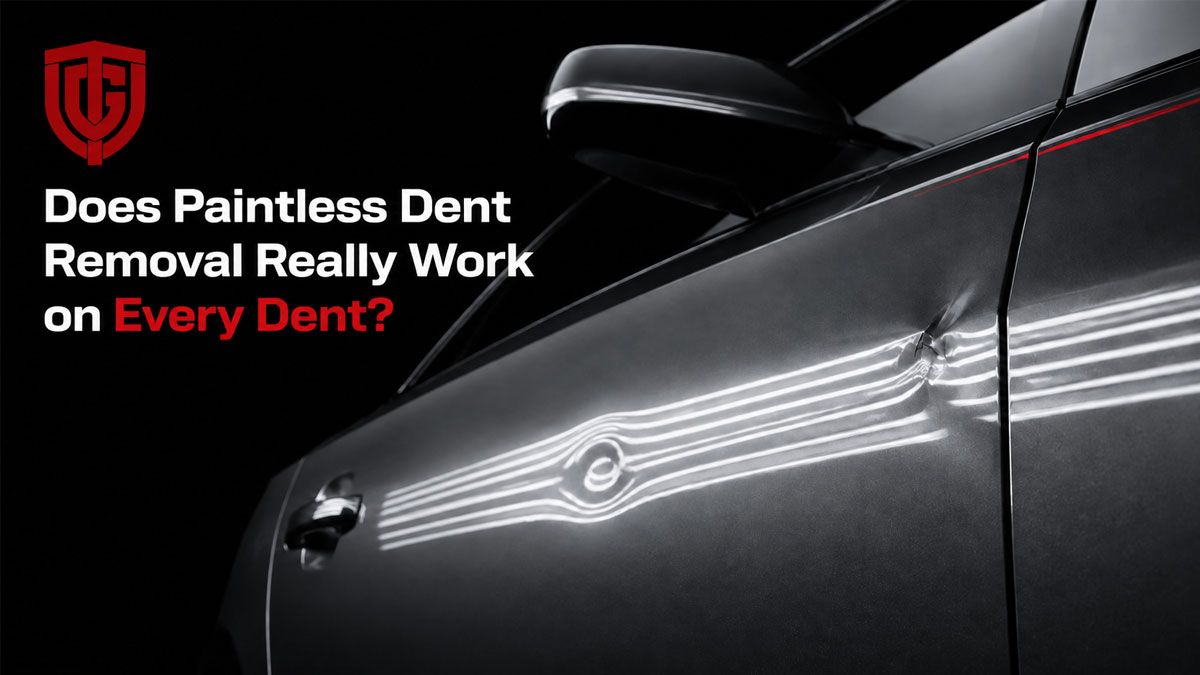
Paintless dent removal is an affordable and suitable option for removing various door dings, hail dents, shallow creases, and even some surprisingly large dents. But can PDR be a good option for all dents? The short answer is no, we cannot use PRD on all dents; it depends on the paint condition, the depth of the impact, the dent location, and how much the metal was stretched. Since other factors are involved in PDR, we strongly advise all Toronto and GTA drivers to send a photo of the dent to get our estimate, then set a date to repair your car!
Does Paintless Dent Removal Really Work on Every Dent?
If the original paint on the vehicle is intact and the metal has not torn out, we have a good chance of using PDR to remove the dent.
A dent is more likely to qualify for PDR when:
- The paint has not cracked or chipped
- The metal has not been sharply stretched
- The dent has smooth, gradual edges
- The technician can access the damaged area
- The panel has not been repaired with body filler before
- The damage is not located on a severely crushed panel edge
- The impact has not damaged a structural component
Does Paintless Dent Repair Actually Work?
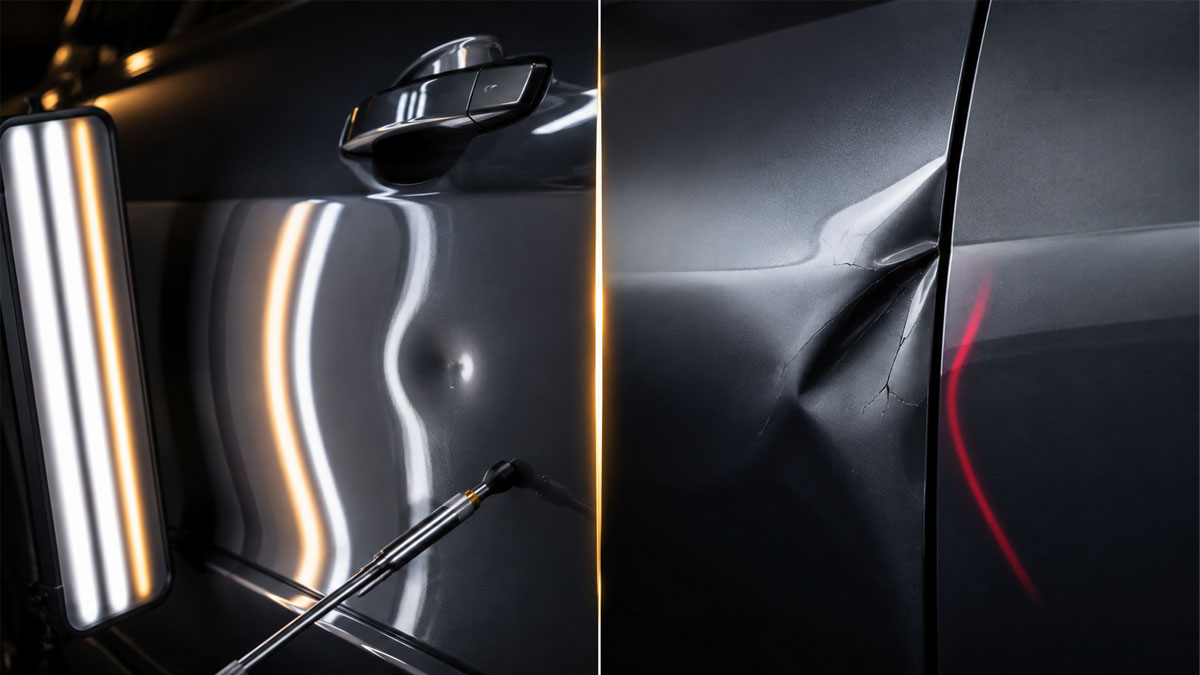
Many industry experts suggest that paintless dent repair (PDR) is the most preferable solution for fixing minor dings, hail damage, and creases. Our experts at GT Auto Styling work so slowly on each dent that they can return a damaged panel to its original contour without sanding, applying body filler, or repainting it. If the dent removal process is done carefully, the damaged area will be blended into the original panel without any signs that a dent was previously there.
The quality of the result depends on several factors:
- The technician’s experience
- The type and thickness of the metal
- The depth and shape of the dent
- The condition of the factory paint
- The location of the impact
- Access to the back of the panel
- Previous repairs to the same area
How Does Paintless Dent Removal Work?
Paintless dent repair (PDR) is a fast way to fix minor car dents and dings without using paint, sanding, or body filler. Technicians use customized metal rods and picks to reshape the metal back to its factory form from behind the panel. If dents are in a location where the technician cannot reach the dent from behind, we use special glue tabs to pull the metal back out from the outside.
A professional PDR process generally includes the following steps:
- Inspecting the damage
- Finding a safe access point
- Reading the panel
- Releasing pressure around the dent
- Gradually reshaping the panel
- Correcting high spots
- Checking the final finish
What Types of Dents Can Be Repaired With PDR?
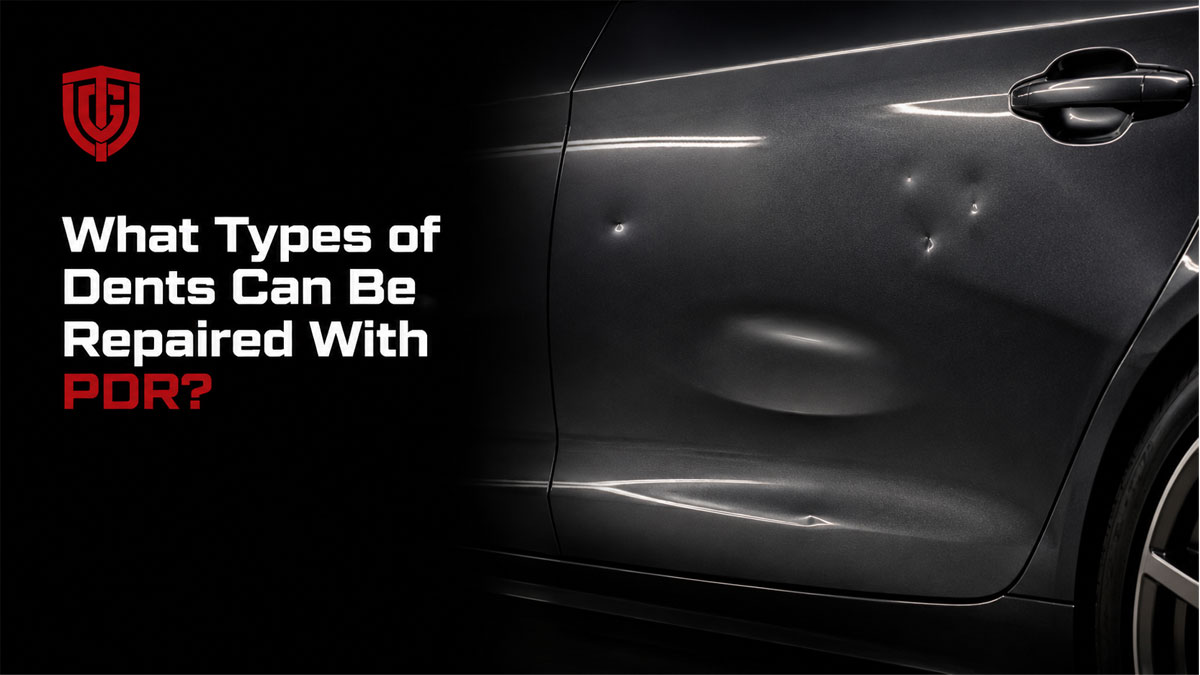
PDR is useful for repairing many types of damage, and some drivers may not even realize they can remove a dent by using this technique. If you want to use PDR, the first step is to consider the dent’s shape and condition. Paintless Dent Repair (PDR) can fix shallow, smooth dents up to a few inches wide as long as the paint is not cracked, scratched, or missing, and the metal is not sharply creased or overstretched.
Small Door Dings
The most common damages that can be repaired with PDR are a vehicle door, a shopping cart or a minor parking-lot impact. Since the dents caused by this situation are small and the colour is intact, it can be done in a few hours.
Hail Damage
In Canada, especially in Toronto and the GTA, hailstones can cause shallow dents without breaking the paint. PDR is a good option to repair hail damage without removing the factory paint.
The technician may need to remove the hood insulation, headliner or interior trim to reach the affected panels. The repair time depends on the number, size and location of the dents. A vehicle with widespread hail damage may require significantly more labour than one with a single door ding.
PDR may not be sufficient when hail has cracked the paint, damaged glass, created extremely sharp impacts or severely stretched the panels.
Shallow Dents
Shallow dents on relatively open areas of a door, hood, roof, fender or quarter panel are often suitable for PDR. A shallow dent allows the technician to gradually release the tension in the surrounding metal.
Creases and Body-Line Dents
Some creases and body-line dents can be repaired with PDR, but they require greater precision than simple round dents.
Large but Shallow Dents
A large dent is not automatically disqualified from paintless repair. Broad, shallow damage may be easier to reshape than a small but extremely sharp dent.
How Big of a Dent Can PDR Fix?
There is no universal maximum diameter for PDR. Under the right conditions, a skilled technician may repair a dent several inches across or even damage that covers a larger section of a panel.
| Dent condition | Likelihood of PDR |
| Small and shallow with intact paint | Excellent candidate |
| Medium-sized with smooth edges | Often repairable |
| Large but broad and shallow | Potentially repairable |
| Small with a sharp central point | More difficult |
| Deep with visibly stretched metal | May require bodywork |
| Any size with cracked paint | PDR alone is insufficient |
What Dents Cannot Be Repaired With PDR?
PDR is designed to reshape metal while keeping the existing paint. When either the metal or paint has suffered severe damage, a different repair method may be needed.
- Dents With Cracked or Chipped Paint
- Deep Dents With Stretched Metal
- Dents on Sharp Panel Edges
- Damage With Tears or Severe Creases
- Dents With Limited Tool Access
Professional PDR vs. DIY Dent Pullers
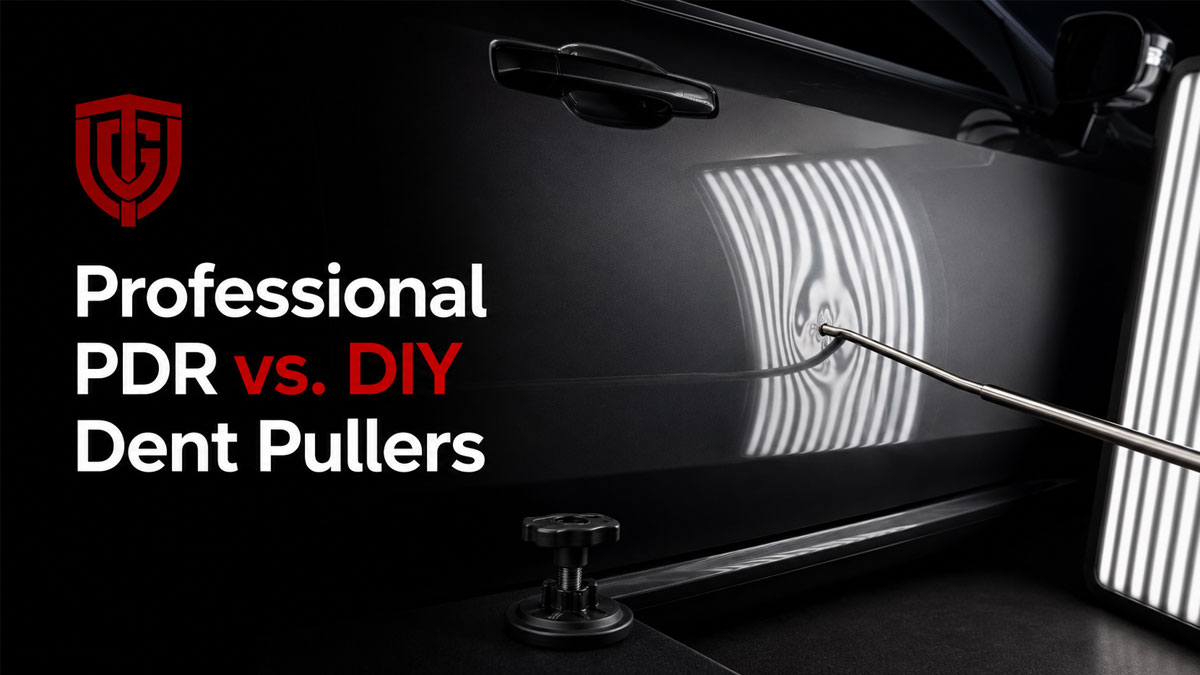
DIY dent pullers can sometimes improve a broad, shallow dent, but they do not provide the control or visibility available during a professional repair. Pulling only the centre of a dent without releasing pressure around its edges can create a raised spot or leave a distorted ring around the original damage.
| Professional PDR | DIY dent puller |
|---|---|
| Damage assessed before repair | Suitability is often guessed |
| Controlled lighting reveals distortions | Small imperfections may be missed |
| Multiple tools and access methods | Usually limited to exterior pulling |
| Metal tension is released gradually | The dent may be pulled too aggressively |
| High spots can be corrected precisely | High spots may be difficult to remove |
| Technique adapted to panel material | The same approach is often used on every dent |
How Do Technicians Decide Whether PDR Will Work?
A responsible technician does not determine PDR suitability by looking only at the dent’s diameter. The entire damaged area must be assessed under proper lighting.
The inspection normally considers:
- Whether the paint is original or previously refinished
- Whether the clear coat has cracked
- The depth and diameter of the dent
- The location of the impact point
- The amount of metal stretching
- The presence of sharp creases
- The type of panel material
- Access behind the damaged area
- Internal braces or reinforcement
- Nearby edges and factory body lines
- Previous filler or body repairs
- The customer’s expected finish
Get a Professional PDR Assessment in Toronto
If you are unsure whether a dent qualifies for paintless repair, send GT Auto Styling clear photographs of the damage or arrange an in-person assessment. Our team will examine the paint, panel shape, impact depth and available access before recommending PDR or conventional body repair.
GT Auto Styling serves drivers from Toronto, Markham, Richmond Hill, Vaughan, North York, Scarborough and Thornhill. The shop is located at 40 Guardsman Road, Markham, Ontario, L3T 6L3, and is open Monday through Saturday. You can call 416-893-3330 to discuss the damage or request an estimate.
Frequently Asked Questions About Paintless Dent Removal
Can Dents Come Back After PDR?
A correctly completed PDR repair should be permanent. The technician physically reshapes the metal rather than temporarily hiding the dent. It should not return unless the panel is struck again or the original repair failed to release the metal tension properly.
Does PDR Completely Remove a Dent?
PDR can completely remove many suitable dents. The result depends on the paint condition, metal stretching, dent location and technician’s access. Severe or complex damage may be improved substantially without becoming completely invisible.
Can Every Car Dent Be Pulled Out?
No. Dents involving cracked paint, torn metal, extreme stretching, structural damage or sharp folds may require conventional body repair. Some dents also need to be pushed from behind rather than simply pulled from the exterior.
Read More


