
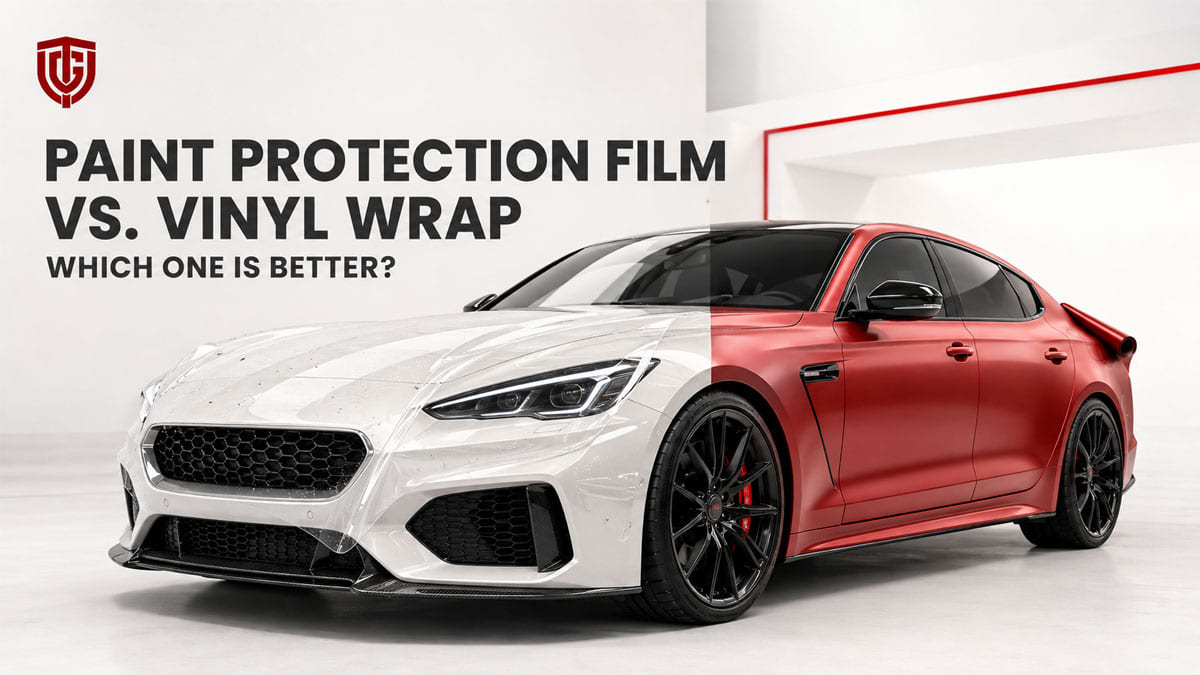
When we talk about protecting and changing a car’s exterior, all drivers should choose between two options: PPF or vinyl wraps. While PPFs are designed to fully protect the car’s surface, vinyl wraps are mostly for changing the exterior look. PPFs are usually twice as expensive as vinyl wraps; however, they also offer more features. But the real question is: can we use them interchangeably or even simultaneously? Since Toronto and GTA drivers are mostly exposed to environmental dangers, we are going to discuss which option is more suitable for them and how they can use both to protect their car’s exterior.
What Is Paint Protection Film?
Paint protection film is a thin, adhesive polyurethane film that, when applied to metal surfaces, protects them from environmental hazards. PPF was first designed for military purposes in the 1960s during the Vietnam War. The primary use of PPFs was to block external threats from enemies, but because the impact was too great, they were ineffective. However, 3M decided to make it a commercial success and used it on sedans, and it was then that it showed its true usage. PPF is applied over the factory colour of the car, and it can safely handle water pressure under 2,000 PSI, rock chips, flying gravel, sand, and small stones. At GT Auto Styling, we primarily use XPEL PPFs, but other brands, such as 3M, are available on the market.
What Is a Vinyl Car Wrap?
Vinyl wraps are also thin layers of colored, adhesive-backed film applied to a car’s surface to change its exterior. Drivers can choose different vinyl wraps to customize the exterior and apply their business logos to the car, or they can use them to completely transform their car. While vinyl car wraps are mostly used to change the car’s appearance, they can also protect the car’s natural color; however, their protective properties are considerably lower than those of PPF. At GT Auto Styling, we work with premium automotive wrap films from 3M and Avery Dennison. These brands provide extensive selections of gloss, matte, satin, metallic, and specialty finishes.
What Is the Difference Between Paint Protection Film and Vinyl Wrap?
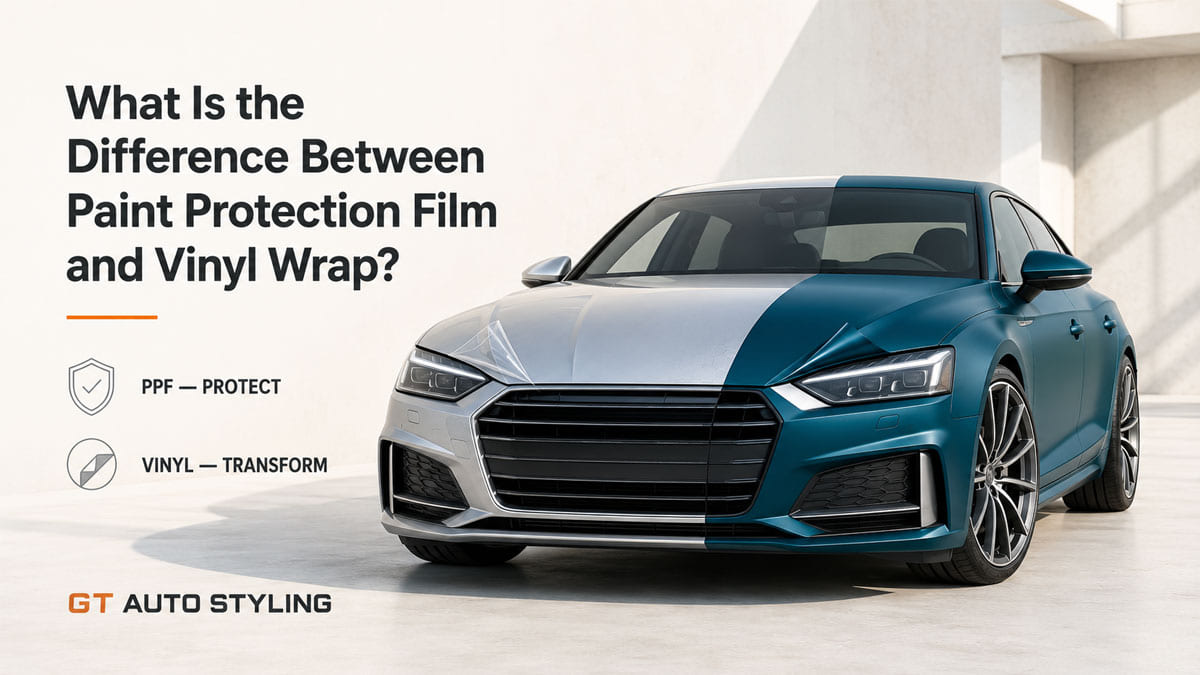
The reasons why drivers choose PPF and vinyl wrap are completely different. PPF is for protection, while vinyl wraps are for aesthetics. However, if you are ordering business wraps with customized templates, PPF over wraps can extend the lifespan of the wraps and help your car withstand exterior hazards.
| Feature | Paint Protection Film | Vinyl Wrap |
|
Primary purpose |
Paint protection | Colour and style change |
|
Common material |
Polyurethane protection film | Cast vinyl |
| Film construction | Thicker and impact-focused |
Thinner and appearance-focused |
|
Rock-chip protection |
Strong | Limited |
| Light scratch resistance | Stronger; selected films self-heal |
Provides limited surface coverage |
|
Colour options |
Usually clear, gloss, satin or selected colours | Wide range of colours and effects |
| Factory-paint visibility | Preserves or subtly changes it |
Covers it |
|
Best application |
New, luxury, highway-driven or valuable vehicles | Styling, branding and colour changes |
| Typical investment | Generally higher for equivalent coverage |
Generally lower than full-body PPF |
| Main buying reason | Keep my paint safe |
Change how my car looks |
Which Option Protects Your Paint Better?
The main goal of applying PPF is to absorb external hazards and to protect the car. Meanwhile, the colored PPF can also change the car’s factory paint; its main objective is to protect the surface. Nowadays, vinyl wraps are used for aesthetic purposes, such as making your brand recognizable on the streets or wherever you go, but the protective layer they offer is much less than that of PPF.
The original thickness of typical PPFs is 6.5 to 10 mils (165–254microns); however, vinyl wraps are 2 to 4 mils (50–100 microns) thick. First-hand experience shows that PPF resists 16 kg of force (high rock-chip deflection), whereas vinyl wraps can only absorb 4.3 kg of force (easily torn/punctured by debris). Moreover, the tear strength of Paint Protection Film (PPF) is 80 to 200 kN/m; however, for vinyl wrap, it is 30 to 100 kN/m.
Which Gives You More Styling Freedom?
No questions asked, vinyl wraps come in thousands of styles, and each brand offers its own unique colours, textures, and finishes that can really transform your car’s exterior design. Traditional PPFs came only in transparent form and did not add any beauty to the car’s exterior; however, modern PPFs are coloured and can protect and change the car’s exterior look simultaneously. To be honest, the beauty that vinyl wraps are offering is much more than what you can find on PPFs.
How Long Do PPF and Vinyl Wrap Last?
Unquestionably, in the worst-case scenario, the lifespan of PPF is much longer than that of vinyl wraps. Selected XPEL PPF products carry a 10-year warranty, while XPEL describes its films as resistant to yellowing, staining, and fine surface scratches under the applicable product conditions. This is while the best vinyl wraps come with a 7-year warranty.
Is PPF More Expensive Than Vinyl Wrap?
The starting price for full-body vinyl wraps is $2,800 and may increase based on the options the driver chooses. The brand, texture, colour and car’s model can really change the price, and the final price can go over $4,000. Nevertheless, the full-body PPF starts at $4,490, and depending on the car’s model, the amount of protection film used, and the time we spend in the bay, it can also reach $8,000. So, if we look closely, PPFs are more expensive than vinyl wraps, and the price of each option can increase.
Can Paint Protection Film Be Installed Over Vinyl Wrap?
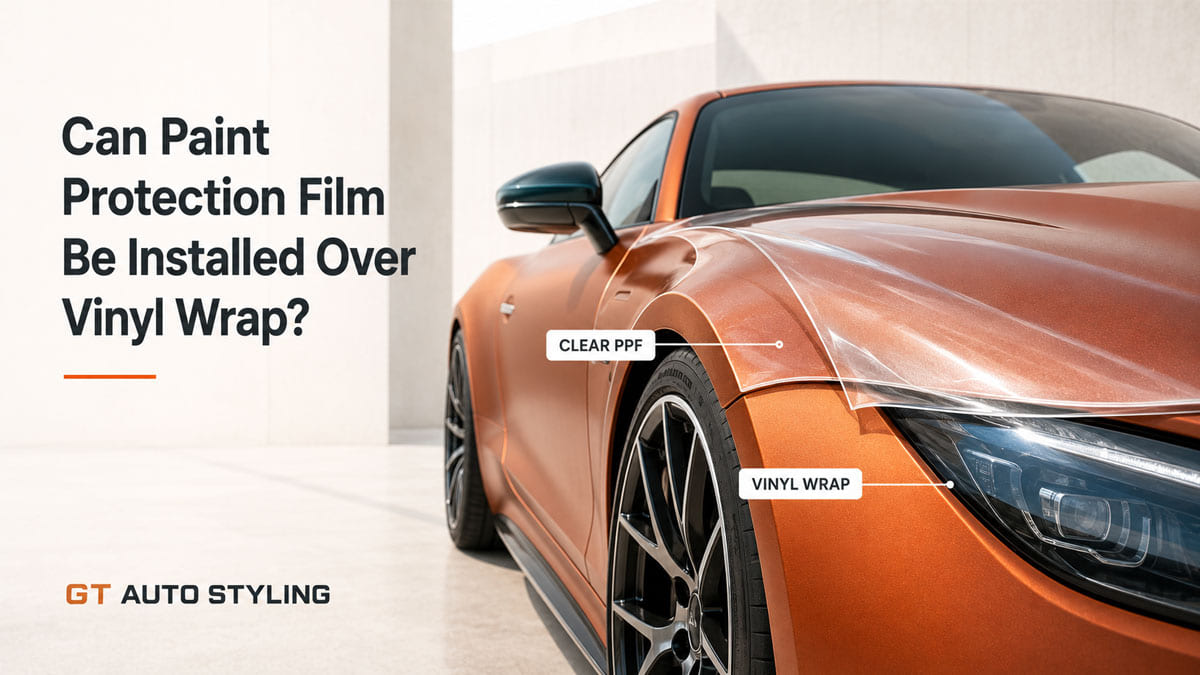
The best way to fully protect your car and customize its exterior look is to apply PPF over vinyl wraps. It is mostly used for business-related vinyl wraps and is not recommended for a full wrap around the car.
PPF vs Vinyl Wrap for Toronto Weather and Road Conditions
Toronto and Markham drivers face conditions that are not especially kind to exposed paint. Winter road maintenance throughout the region includes plowing, salt, brine, and sand. Markham’s major roads are regularly salted and plowed during winter, while Toronto also uses salt and brine across its road network. These conditions may require special care, and it is highly recommended to use PPF on your car.
Should You Choose PPF, Vinyl Wrap, or Ceramic Coating?
The main thing that you should be aware of is that none of these are interchangeable. PPF, vinyl wrap, and ceramic coating are designed for specific purposes. As a first step, consider what you are looking for, then apply it to your car.
| Feature | PPF | Vinyl Wrap |
Ceramic Coating |
|
Main purpose |
Protect factory paint | Change vehicle colour and style | Improve gloss and make cleaning easier |
| Rock-chip protection | Strong | Limited |
Very limited |
|
Scratch protection |
Strong against light scratches and scuffs | Limited surface protection | Helps reduce very light swirl marks |
| Colour customization | Limited, depending on the selected film | Excellent range of colours and finishes |
Does not significantly change the colour |
|
Self-healing properties |
Available with selected XPEL films | Not typical | No |
| Chemical and stain resistance | Strong | Moderate |
Strong |
|
Ease of maintenance |
Easy to maintain | Requires careful film-safe cleaning | Easiest to wash and maintain |
| Typical lifespan | Often the longest-lasting option | Depends on film, finish, and exposure |
Requires periodic maintenance or reapplication |
|
Relative cost |
Highest | Medium to high | Lowest to medium |
| Best for | New, luxury, exotic, and highway-driven vehicles | Colour changes, custom styling, and commercial branding |
Drivers who want more gloss and easier washing |
| Main limitation | Higher initial cost | Cannot match PPF for impact protection |
Does not stop rock chips |
Request a Personalized PPF or Vinyl Wrap Estimate
At GT Auto Styling, we offer both PPF and vinyl wrap services to all drivers across Toronto and the GTA. Your vehicle does not need the same solution as every other car in Markham. A weekend sports car, a daily-driven SUV, and a highway commuter face different risks. Moreover, we have specialized designers for vinyl wraps who customize your car to your specifications. We are a trusted XPEL installer, and for vinyl wrap, we only work with 3M or Avery Vinyl.
Just call us and let us handle your car’s beauty and protection.
Paint Protection Film vs Vinyl Wrap FAQs
Can PPF and vinyl wrap be installed on the same vehicle?
Yes. Vinyl wrap can change the colour, while XPEL PPF protects high-impact areas.
Does vinyl wrap protect paint from rock chips like PPF?
No. Vinyl offers light protection, but PPF is designed for rock chips and road debris.
Which option is better for preserving resale value?
PPF is usually better because it helps preserve the original factory paint.
Can removing PPF or vinyl wrap damage the paint?
Not usually when removed professionally from healthy factory paint. Weak or repainted surfaces may be at risk.
Is PPF worth installing on an older or repainted vehicle?
Yes, when the paint is stable, fully cured, and in good condition.
Which lasts longer: PPF or vinyl wrap?
PPF usually lasts longer, depending on the product, installation, exposure, and maintenance.
Read More
How Does PPF Protect Your Car from Rock Chips?
Full PPF vs Partial PPF: Which Coverage Is Worth It?


