Window tint may look like a simple dark film, but not all tints perform the same way. What are the main differences between Dyed, carbon, and ceramic tint? Which are they all effective against UV Rays? A cheap tint may give you privacy today but starts fading after a few summers, while a premium ceramic film can protect the cabin and keep the car more comfortable for years. For drivers in Toronto and the GTA, since they experience strong summers, direct sunshine, harsh winters, and constant temperature changes, this difference matters even more. Choosing the right film is therefore not only about how dark you want the windows to look.
What Are the Main Types of Window Tint?
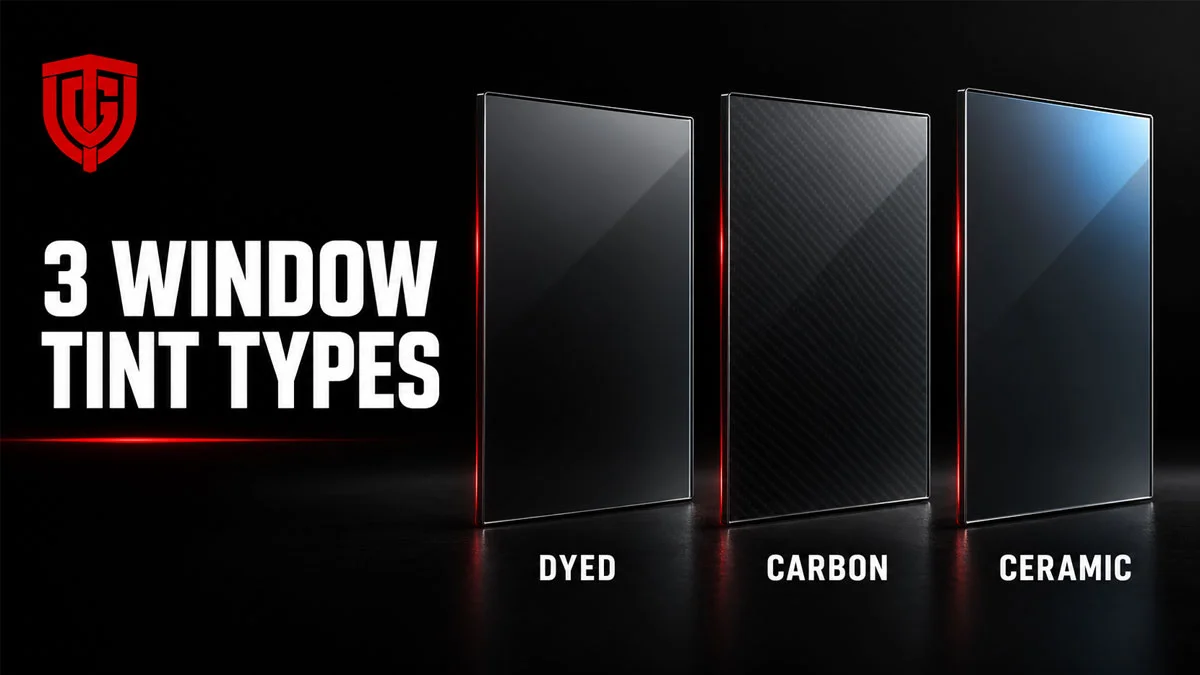
There are three main types of automotive window tints, each with its own specific features.
- Dyed tint: affordable and mainly designed for appearance and privacy.
- Carbon tint: improves heat rejection and provides better durability.
- Ceramic tint: premium film designed for stronger heat and UV protection without using metallic particles.
The biggest differences come down to price, heat rejection, clarity, durability, and long-term appearance.
What Is Dyed Window Tint?
If you are looking for an affordable and useful window tint, then the dyed series is just the best option for you. It contains layers of dye that absorb some of the sunlight entering the vehicle, creating the darker appearance most drivers expect from tint. If your main priority is privacy, appearance, and keeping the initial cost low, then dyed window tint is exactly what you need. However, a downside of dyed window tint is that it rejects less heat, which means the interior temperature will rise, and you need the AC to work as it did before installing the window tint. For an older vehicle or a driver looking for a simple cosmetic upgrade, dyed tint can still make sense.
What Is Carbon Window Tint?
Carbon window tint is the middle ground between a simple choice and the premium option. Instead of depending mainly on dye, the film contains carbon particles that help reduce infrared heat entering the cabin. Carbon tint generally provides better heat rejection and longer-lasting color than standard dyed tint. It can also give windows a clean, dark appearance without the shiny finish associated with some older metallic films. If you want better comfort but do not want to pay ceramic-tint prices, carbon is usually the middle-ground option.
What Is Ceramic Window Tint?
Ceramic window tint is the premium series, offering a full range of features for drivers. It uses microscopic ceramic particles designed to reduce incoming heat and UV radiation while maintaining good optical clarity. Unlike older metallic films, ceramic tint does not depend on metal particles, meaning it is less likely to interfere with GPS, Bluetooth, mobile reception, or other electronic signals.
At GT Auto Styling, we offer XPEL’s ceramic window tint options, including XPEL PRIME XR and PRIME XR PLUS. PRIME XR can reject up to 85% of infrared heat, while the premium PRIME XR PLUS can reject up to 96% of infrared heat. Both films block 99% of harmful UV rays, helping protect your skin, dashboard, leather seats, screens, and interior trim from long-term sun exposure. For drivers looking for XPEL’s highest level of heat rejection and comfort, PRIME XR PLUS is the stronger choice.
Dyed, Carbon, and Ceramic Tint: Key Differences
If you want to know more about the differences between dyed, carbon, and ceramic tints, we have created a table. However, for more information and to get the best offers, please contact us
| Feature | Dyed Tint | Carbon Tint | Ceramic Tint |
| Price | Lowest | Medium | Highest |
| Heat rejection | Basic | Good | Excellent |
| UV protection | Good | Very good | Excellent |
| Visibility | Good | Very good | Excellent |
| Fade resistance | Moderate | Strong | Very strong |
| Signal interference | None | None | None |
| Expected lifespan | Around 3–5 years | Around 5–7 years | Around 7–10+ years* |
Which Window Tint Offers the Best Heat Rejection?
Data from major window tint producers such as XPEL, 3M, and LLumar show that ceramic tint offers the strongest heat rejection of the three. Drivers should know that darkness and heat rejection are not the same thing. A very dark dyed tint can sometimes reject less heat than a lighter premium ceramic film. While many drivers misunderstand the distinction between these two features, choosing the best series depends on your needs. If summer comfort is the priority, look at the film’s total solar energy rejection and infrared performance, not simply how dark the glass looks.
Carbon vs Ceramic Tint: Visibility and Performance
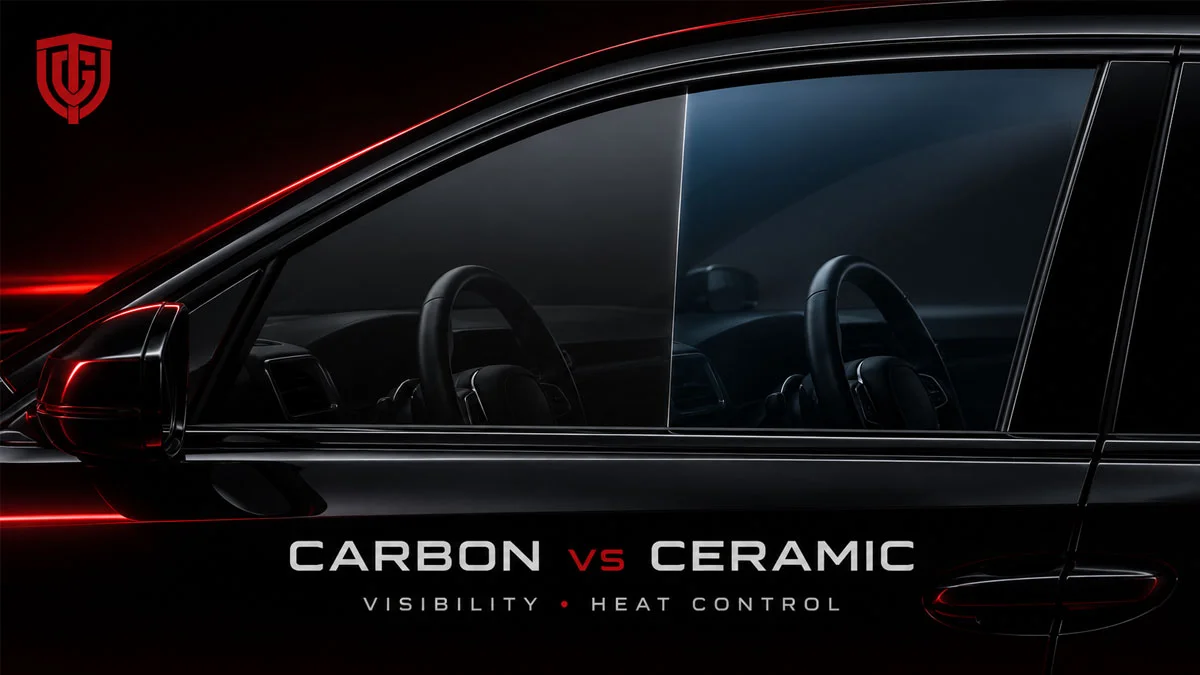
Both carbon and ceramic tint scans provide good visibility when quality film is professionally installed. However, the drivers who have applied ceramic films have indicated that they have stronger performance without requiring extremely dark windows. If you want a balance between cost and performance, carbon is the best option. Ceramic makes more sense when you want maximum heat control, long-term clarity, UV protection, and a cooler interior.
How Long Do Different Window Tints Last?
While material matters, however, the most important part is how and by whom the film is installed on your car. Basic dyed films may last around 3–5 years, while better carbon films can often reach 5–7 years. Premium ceramic films can last 7–10 years or longer when properly installed and maintained. Keep in mind that if the best film is installed unprofessionally, then even expensive tint can develop bubbles, peeling edges, contamination, or uneven sections if the glass preparation and installation are rushed.
Which Type of Window Tint Is Best for Your Car?
If anyone without any estimation tells you that a single window tint is suitable for your car, then surely he is not a professional. Each car needs evaluation, and each driver has specific requirements in mind. Choose dyed tint if you mainly want privacy and appearance at the lowest cost. Choose carbon tint if you want noticeably better heat performance without moving into the premium price range. Choose ceramic tint if you want the highest level of comfort, UV protection, clarity, and long-term performance.
For a vehicle you plan to keep for several years, spending more on the film once is usually better than replacing cheap tint twice.
Best Window Tint for Toronto Drivers
Toronto summers can push cabin temperatures surprisingly high when a vehicle sits under direct sunlight. Add highway driving, large panoramic roofs, dark interiors, and hours spent in GTA traffic, and heat rejection becomes much more important than simply darkening the windows.
For that reason, ceramic tint is our preferred option for drivers who want maximum performance. At GT Auto Styling, we help customers in Markham, Toronto, Richmond Hill, Vaughan, and across the GTA choose the right film and tint level based on their vehicle, driving habits, budget, and desired appearance.
If you are unsure whether carbon or ceramic tint makes more sense for your car, contact GT Auto Styling for a personalized recommendation before choosing based only on price.
Window Tint Types FAQs
Which type of tint is better, carbon or ceramic?
Ceramic is generally better for heat rejection, UV protection, and long-term performance. Carbon is the more affordable option and still provides good heat reduction.
Is carbon tint better than dyed tint?
Yes, in most performance categories. Carbon tint normally lasts longer, rejects more heat, and is more resistant to fading than basic dyed tint.
Is ceramic tint better than dyed tint?
Yes. Ceramic tint offers significantly better heat management, durability, and UV protection, although it also costs more.
What are the three main types of window tint?
The three most common automotive window tint options are dyed, carbon, and ceramic.
Read More
Does Window Tint Actually Keep Your Car Cooler?