
When we speak about protecting the exterior of the car, PPF is considered the best solution. PPFs are affordable, easy to apply, and when the best model is selected, they can protect against gravel, road salt, scratches, and road debris. But what about rock chips? Is PPF useful against them as well? Depending on the film quality and brand, yes, PPFs can fully protect the surface of the car against rock chips. At GT Auto Styling, we install premium XPEL PPFs for drivers in Markham, Toronto, Richmond Hill, and all other parts of the GTA.
How Does PPF Protect Your Car from Rock Chips?
PPFs are thin, transparent or colorful layers applied to the surface that, because of their texture, absorb the hit. These films are mostly made from thermoplastic polyurethane, a liquid designed to absorb sudden, light impacts. When a small object hits the surface of the car, this chemical structure transfers the impact to other parts and protects the surface from damage. When high-quality PPFs are installed properly, they can help with;
- Absorb and distribute impact energy.
- Prevent stones from directly striking the paint
- Reduce clear-coat chipping
- Protect against sand, salt, insects, and road grime
- Resist light scratches and swirl marks
- Preserve the original factory finish
How Effective Is PPF Against Gravel and Road Debris?
It is very common that when you are driving on Highway 401, Highway 404, Highway 407, the Don Valley Parkway, or construction-heavy roads throughout the GTA, small stones, gravel, sand, salt, and road debris damage your car. That is exactly where XPEL PPFs come in to protect your car. Depending on the car model and its size, the effectiveness of PPF against gravel and road debris depends on:
- The size and sharpness of the object
- The speed of your vehicle
- The speed of the approaching object
- The angle of impact
- The thickness and quality of the PPF
- The condition and age of the film
- The quality of the installation
What Types of Rock Chips Can PPF Prevent?
Many drivers think that PPFs should protect cars from any kind of rock chips; however, there are some limits as well. Based on experts’ ideas, PPFs are effective against;
- Small gravel thrown by nearby vehicles
- Loose stones on highways and rural roads
- Sand and road grit
- Winter salt particles
- Minor construction debris
- Small stones kicked up by truck tires
- Light scratches from branches or brushes
- Bug impacts and staining
- Surface scuffs in parking areas
Based on what we have experienced at GT Auto Styling, PPF is likely effective against large stones, sharp metal debris, severe collisions, or objects striking the vehicle at high speed.
Can Rock Chips Still Damage a Car with PPF?
If you read Reddit’s reviews, you may see that some people complain that even though they applied PPF, they still experienced car damage. The reason lies in two critical factors: PPF type and the power of impact. You should keep in mind that PPFs can reduce the risk, but they cannot fully override the laws of physics. There are some conditions that a heavy impact may;
- Cut or puncture the film
- Leave an indentation in the paint
- Damage the panel underneath
- Create a visible mark in the PPF
- Lift the film near an edge
- Require replacement of the affected section
Full-Front PPF vs Partial PPF for Rock-Chip Protection
One of the most asked questions is whether we can apply PPF only on the front of the car to protect it from rock chips? Honestly, we always recommend full front PPF to protect luxury cars, but for regular sedans and drivers with a low budget, it’s common to use partial PPF too. Full-front PPF usually covers the full hood, full front fenders, front bumper, side mirrors, and headlights. That is why it protects cars more effectively against road rock chips.
How to Fix Rock Chips or Damage on PPF
If you want to repair damage caused by rock chips on a car, the first step is to evaluate whether the damage is on the film or has reached the surface. XPEL PPFs come with self-healing properties, so most damage on the film will be resolved under the sun or with strong heat. However, if you are facing serious damage on the surface, the process includes;
- Inspecting the affected film and surrounding paint
- Determining whether the film has been punctured
- Removing the damaged PPF section
- Cleaning and decontaminating the panel
- Repairing or touching up exposed paint when necessary
- Allowing the paint repair to cure properly
- Installing a new piece of PPF
- Checking the edges and finish
At GT Auto Styling, we first determine how serious the damage is, then rely on our long-time expertise to repair it and carefully reinstall the PPF. If we have applied the PPF, the entire recovery process is part of your warranty, but if we are not the installers, we will estimate the price and then start the process.
Can You Apply PPF Over Existing Rock Chips?
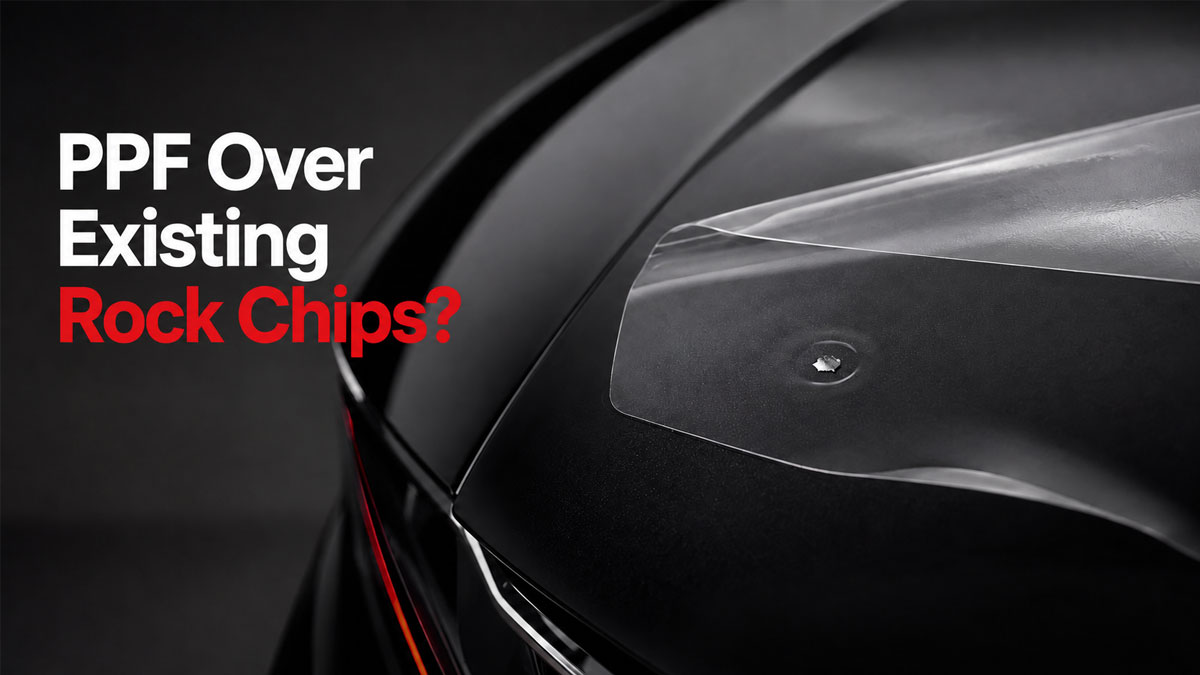
Technically, it is possible to apply PPF over existing rock chips; however, our experts recommend never doing that. Since most PPFs are transparent, any defects may remain noticeable underneath. Another negative point is that each scratch will trap small pockets around the edges and may destroy the final look. That is why, at GT Auto Styling, we first clean and decontaminate all damage, then match the color to repair it.
Is PPF Worth It for Rock-Chip Protection?
When you drive a luxury car, and the cost of painting and repairing is considerable, applying PPF for protection is a good idea. PPF not only protects the color and surface, but also helps maintain resale value. At GT Auto Styling, we offer the following drivers to consider installing PPF on their car;
- Brand-new vehicles
- Luxury and exotic cars
- Performance vehicles
- Teslas and other EVs
- Dark-coloured vehicles
- Frequent highway commuters
- Long-term vehicle owners
- Drivers concerned about resale value
- Enthusiasts who care about paint condition
Final Verdict: Does PPF Stop Rock Chips?
PPF is the most common way to stop damage caused by gravel, salt, sand, and everyday road debris. Experiments show that XPEL PPF can be highly effective against all types of rock chips, and if the damage causes any problems, you can apply heat to remove it from the film. However, you should keep in mind that PPFs cannot stop all types of damage; they have their own limits and can withstand only a specific amount of pressure.
FAQs
Does PPF completely prevent rock chips?
No, PPF can stop a specific amount of rock-chip pressure, and if the damage is small, XPEL can heal itself.
Is XPEL PPF effective against highway gravel?
Yes, PPF is the best way to control gravel hits.
Can a rock chip damage the paint underneath PPF?
If you choose XPEL PPF, data show that it is extremely effective against external damage and can protect the paint underneath PPF.
Which PPF coverage is best for rock-chip protection?
At GT Auto Styling, we always offer Full-front PPF, which applies to the hood, bumper, front fenders, side mirrors, and other high-impact areas.
Read More
Full PPF vs Partial PPF: Which Coverage Is Worth It?


